Salesforce Admin vs Developer: Which Role Fits You Best?

Home / Blog Salesforce Admin vs Developer: Which Role Fits You Best?

If you’re exploring Salesforce training in Chennai, you’ve probably heard about two popular career paths: Salesforce Admin and Salesforce Developer. At Cloud Data Technologies, we help learners in Chennai understand these roles and choose the one that suits their goals best.
Let’s break it down in simple terms.

What Does a Salesforce Admin Do?

Admins are the backbone of any Salesforce setup. They manage users, customize layouts, create reports, and automate tasks—without writing code. If you enjoy organizing, solving problems, and working with teams, this role might be perfect for you.

Admins typically:

  • Set up users and permissions
  • Build dashboards and reports
  • Automate workflows using Flow
  • Support sales and service teams

Our Salesforce Admin training in Chennai covers all these essentials, helping you become job-ready fast.

What Does a Salesforce Developer Do?

Developers are the builders. They develop tailored functionalities and handle system integrations using programming and advanced automation. If you love coding or want to learn how to build powerful CRM tools, this path is for you.

Developers typically:

  • Write Apex and Visualforce code
  • Build Lightning Web Components
  • Integrate Salesforce with other apps
  • Create custom triggers and APIs

At Cloud Data Technologies Chennai, our Developer track includes hands-on coding sessions and real-world projects.

Admin vs Developer: Quick Comparison

Role
Coding
Tools
Learning
Career Path

Admin
No
Flow, Reports,
 Beginner-friendly
Analyst, Consultant

 Developer
Yes (Apex,JavaScript)

Apex, LWC, Visualforce

Technical, coding required

 Architect, Lead Developer

Which Role Should You Choose?

Choose Admin if:

  • You’re new to tech
  • You enjoy organizing and supporting teams
  • You want a faster entry into the Salesforce ecosystem

Choose Developer if:

  • You love coding
  • You want to build custom solutions
  • You’re aiming for advanced technical roles

Many learners at Cloud Data Technologies in Chennai start as Admins and later transition into Developer roles as they gain experience.

Certifications We Help You Achieve

  • Admin Track:
    • Salesforce Certified Administrator
    • Platform App Builder
  • Developer Track:
    • Platform Developer I & II
    • JavaScript Developer I

Our Chennai-based training programs are designed to help you pass these certifications with confidence.

Final Thoughts

Whether you choose Admin or Developer, Salesforce offers a rewarding career with global demand. The main point of a Salesforce Admin role is to manage and optimize the Salesforce platform for users and teams. Admins ensure everything runs smoothly by configuring settings, automating processes, creating reports, and supporting daily operations—without needing to write code.

They’re the bridge between business needs and technical setup, making Salesforce work better for sales, service, and marketing teams.At Cloud Data Technologies Chennai, we guide you every step of the way—from beginner basics to advanced skills.

Ready to start your Salesforce journey? Explore our Salesforce training in Chennai and find the role that fits you best.

Fun Facts About Salesforce Admins vs Developers

Clicks vs Code—But It’s Not Always That Simple Admins usually work with clicks, not code, to set up and manage Salesforce. But as they grow, many dive into tools like Flow and App Builder. These advanced features let Admins build powerful automations—almost like Developers. So, the line between the two roles often gets blurry.


Admins Often Become Developers It’s common for Admins to shift into Developer roles over time. Once they’ve mastered the basics and earned certifications like Platform App Builder or Platform Developer I, many take the leap into coding. It’s a natural next step for those who want to build more custom solutions.


Developers Depend on Admins More Than You’d Expect Before Developers can start coding, they often need Admins to set up the foundation—like creating objects, assigning permissions, and organizing page layouts. It’s truly a team effort, and both roles need each other to succeed.


Admins Stay Close to the Business Side Admins work directly with sales, marketing, and support teams. They understand what the business needs and help translate those goals into Salesforce features. That’s why they’re often seen as the bridge between tech and strategy.


Developers Earn More—but Training Takes Time Yes, Developers usually earn higher salaries thanks to their coding skills. But getting there takes more time and technical training. Admins, on the other hand, can get certified and job-ready much faster.


Both Roles Are in High Demand With Salesforce growing fast across industries, Admins and Developers are among the top tech roles in 2025. Companies need both to keep their CRM systems running smoothly and efficiently.


You Don’t Have to Pick Just One Path The Best Part? You’re not locked into one role forever. Many professionals start as Admins, explore Developer tools, and eventually move into roles like Consultant, Architect, or even Product Owner. The Salesforce ecosystem is flexible—and full of opportunities.
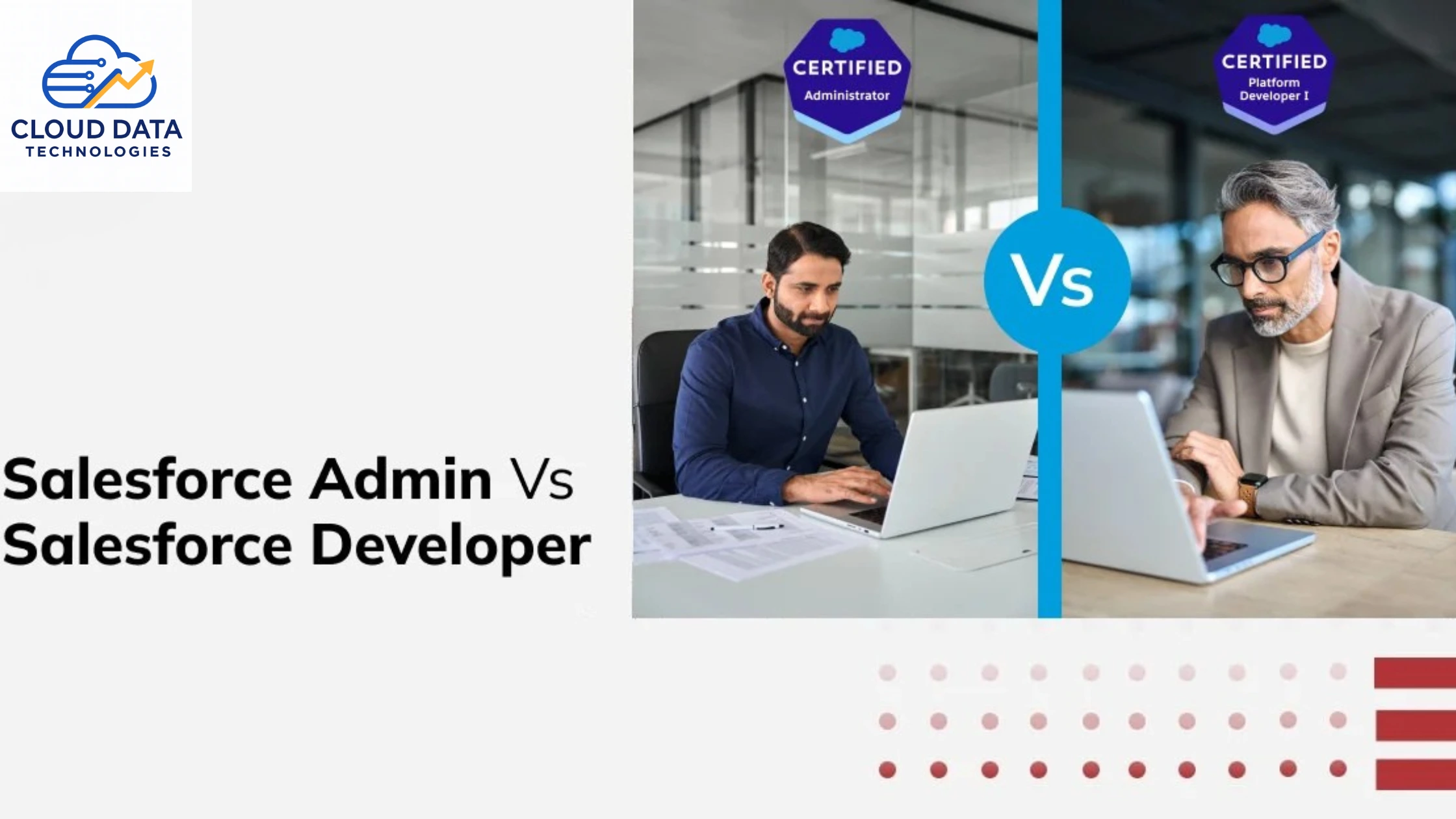


crisp 2 points on Salesforce Admin vs Developer

two crisp comparison points:

Ensures data security, access control, and system usability for end users

Focuses on configuration and user management using point-and-click tools

Builds custom functionalities using Apex, Visualforce, and Lightning Web Components

Responsible for integrations, automation, and scalable technical solutions